
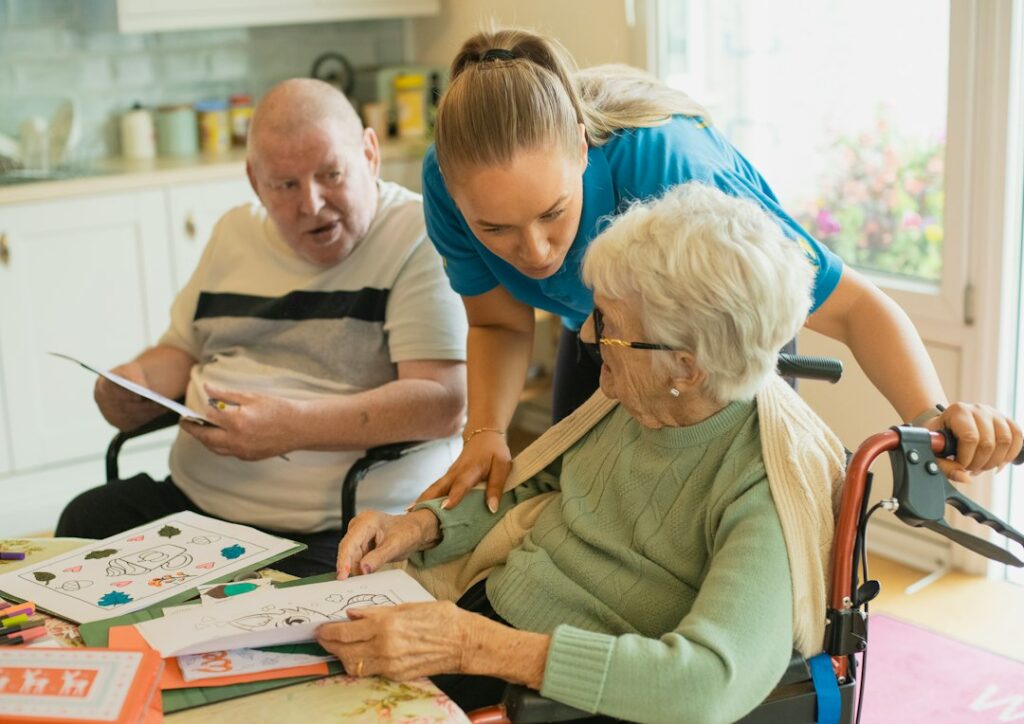
Intergenerational activities bring older adults together with children, teenagers, and younger adults for shared experiences. In assisted living, these activities can support emotional health, mental stimulation, physical movement, and a stronger sense of connection to the wider community.
The value is not simply that different age groups spend time in the same room. Well-planned interaction gives each person a meaningful role, encourages conversation, and creates opportunities to exchange skills, memories, questions, and encouragement.
What are intergenerational activities?
Intergenerational activities are organized experiences involving people from different age groups. In an assisted living setting, participants may include residents, relatives, school-age children, students, volunteers, or younger members of the local community.
Examples include:
- Reading together or discussing favorite books
- Creating seasonal crafts
- Sharing music, singing, or simple instruments
- Gardening in raised beds or indoor containers
- Cooking demonstrations and recipe exchanges
- Storytelling about family traditions and local history
- Board games, puzzles, and card games
- Art projects displayed in a common area
- Technology practice, such as learning how to use a tablet
- Holiday, harvest, or winter activities adapted for indoor spaces
The activity should be designed for conversation and participation rather than treating older adults as spectators. A resident might teach a familiar skill, answer questions about earlier decades, help a child choose colors for an art project, or learn something new from a younger participant.
How can these activities benefit older adults?
Intergenerational programs can reduce loneliness and provide a stronger sense of belonging. Regular contact with younger people may give residents something to anticipate and discuss between visits.
Social interaction also supports emotional well-being. A resident who has limited family nearby may appreciate the chance to form new relationships without the pressure of a formal visit. Children and teenagers often bring energy, curiosity, and humor, while older adults contribute patience, life experience, and perspective.
These activities may also support:
- More frequent conversation
- Greater confidence in social settings
- A sense of usefulness and contribution
- Improved mood during periods of isolation
- Opportunities to express personal interests and memories
- A break from repetitive daily routines
The effect may be especially meaningful during colder months, when snow, ice, early darkness, or difficult walking conditions can make outside activities less convenient for older adults and families. Indoor programs can help maintain connection when ordinary community travel becomes harder.
Do intergenerational activities support memory and thinking?
They can provide useful mental stimulation, although they should not be presented as a cure for dementia or memory loss. Conversation, music, games, storytelling, and creative projects engage attention and encourage residents to recall information, make choices, and respond to changing situations.
A younger participant may ask about a resident’s childhood, favorite work, military service, family traditions, or experiences with local neighborhoods. These questions can prompt memories that are meaningful even when short-term recall is difficult.
Activities can be adjusted for different abilities. For example, a program might include:
- Familiar songs instead of complicated musical instruction
- Large-print materials
- Simple matching games
- Objects that encourage conversation
- Short sessions with rest periods
- Demonstrations followed by hands-on participation
- Repeated routines that create comfort and familiarity
Residents with cognitive impairment should not be excluded automatically. The activity should be paced carefully, with attention to noise, crowd size, personal preferences, and signs of fatigue or distress.
What do younger participants gain?
Intergenerational activities benefit younger people as well. Children and teenagers may develop greater comfort around older adults and learn that aging is not separate from ordinary community life.
They may gain:
- Listening and conversation skills
- A broader understanding of family and community history
- More patience with different communication speeds
- Opportunities to practice reading, leadership, or creative skills
- A realistic understanding of aging and disability
- Positive experiences with people outside their usual age group

Some younger people have little regular contact with older adults. A calm, structured activity can replace uncertainty with familiarity. Residents may also help correct common assumptions, such as the idea that all older adults dislike technology, have the same interests, or need to be passive.
Which activities work best in assisted living?
The most successful activities are purposeful, flexible, and easy to join at different ability levels. A program does not need to be elaborate. A small table with photographs, fabric samples, recipe cards, or familiar household objects may create better conversation than a complicated event.
Activities should account for:
- Hearing and vision differences
- Wheelchair and walker access
- Seating comfort
- Bathroom access
- Hand strength and fine-motor ability
- Attention span and fatigue
- Food allergies or dietary restrictions
- Sensory sensitivities
- Transportation and weather conditions
For residents who tire easily, a 20-minute visit may be more successful than a long gathering. For others, a recurring project may build confidence over time. A garden activity, for example, can begin with sorting seeds, continue with planting, and later include observing growth or preparing herbs for a meal.
How can families make visits more meaningful?
Families can plan visits around shared activity rather than relying only on conversation. Bringing a child’s drawing, a family photograph, a simple puzzle, or a favorite song may give everyone an easy starting point.
It helps to avoid testing a resident’s memory with questions such as “Do you remember me?” Instead, use open invitations:
- “Would you like to look at these pictures with me?”
- “Which color should be used for this project?”
- “What kind of music did you enjoy?”
- “Would you show me how this game works?”
- “What would make this recipe taste familiar?”
Children should receive simple guidance before visiting. They can be reminded to speak clearly, allow extra time for responses, avoid climbing on furniture, and understand that some residents may not want to participate every time.
What common mistakes should be avoided?
Intergenerational programming can become uncomfortable if it is treated as entertainment for one group or if participation is forced. Older adults should be offered choices, and younger participants should not be expected to behave like unpaid caregivers.
Other concerns include excessive noise, crowded rooms, activities that are too childish, and schedules that ignore residents’ routines. A craft may be enjoyable for some people but frustrating for those with limited hand control. A large musical gathering may be pleasant for one resident and overwhelming for another.
Privacy and dignity also matter. Photos, recordings, and public sharing should follow the resident’s preferences and applicable facility policies. Personal stories should not be repeated outside the activity without permission.
How can communities build lasting connections?
Consistency usually matters more than size. A monthly visit with familiar participants may be more valuable than a single large event. Over time, residents may recognize younger visitors, remember their interests, and develop genuine relationships.
Programs can also reflect the character of the area by including seasonal traditions, family recipes, local work histories, weather-related memories, and stories about how homes and neighborhoods have changed. These subjects give residents a chance to contribute knowledge rather than simply receive services.
Intergenerational activities work best when they are respectful, accessible, and built around mutual contribution. They help assisted living residents remain connected to community life while giving younger people a more personal understanding of experience, aging, and shared responsibility.
